

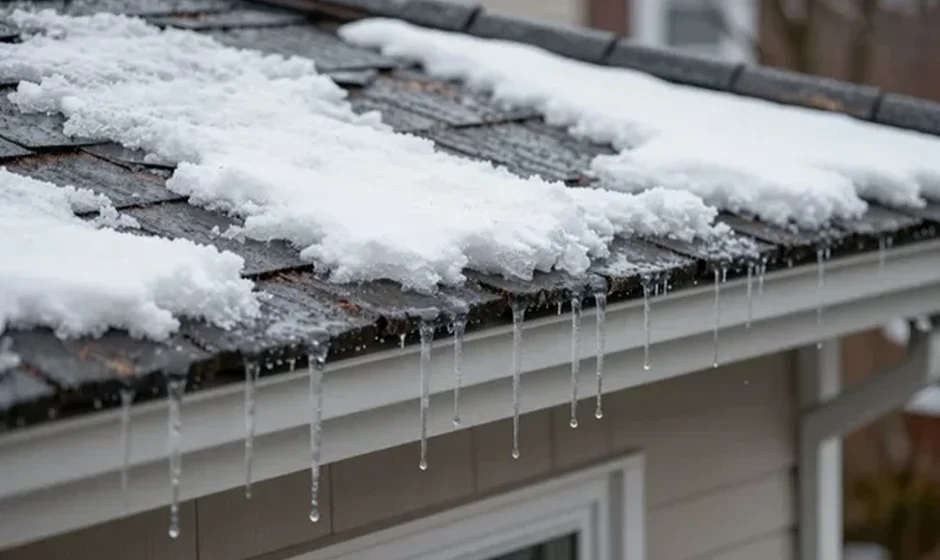

Somewhere in the middle of a DMV winter, a roof can be frozen stiff at dawn, dripping by lunch and glazed with ice again by dinner. That swing repeats dozens of times between December and March across Northern Virginia, Maryland and the District. The region rarely gets the deep, steady cold of New England, and that is exactly the problem. Constant melting and refreezing works on a roof far harder than a long freeze ever would.
Most homeowners discover this through a brown ring on a bedroom ceiling in February, long after the cheapest fix has passed. Local roofers see the same pattern every year. ASA & Sons, which has handled roof repairs and full replacements around Alexandria and the wider DMV since 2009 with more than a thousand completed projects, is the kind of crew homeowners end up calling once that stain appears. The better move is to look at the roof in October and November, while the weather still cooperates and small problems are still small.
Winter Doesn’t Break Roofs, It Finds the Weak Spots
Water expands by roughly nine percent when it turns to ice. That sounds minor until you picture it happening inside a hairline crack in the sealant around a vent pipe, under the edge of a shingle that has lost its grip, or around a nail that has backed out a quarter inch. Each freeze pries the gap a little wider. Each thaw lets a little more water in. By spring, a flaw that was invisible in September can be an open path into the decking.
This is why winter leaks so often show up in places that looked fine all year. The cold did not create the weakness. It simply exploited something summer heat, UV exposure and a few strong storms had already started.
A Slow Walk Around the House
You can learn a surprising amount without ever climbing a ladder. Pick a clear afternoon, grab a pair of binoculars and circle the house slowly, looking at each slope from more than one angle. Pay attention to these signs.
- Shingles that curl at the edges or cup in the middle, which usually means they are drying out and losing flexibility.
- Tabs that are lifted, creased or missing, often along the windward side of the house.
- Heavy piles of dark granules in the gutters or at the bottom of downspouts, a sign the shingles are shedding their protective layer.
- Metal flashing around the chimney, skylights or wall joints that looks bent, rusted or pulled away.
- Sagging sections of gutter or fascia boards that look darker or softer than the rest.
Dark streaks running down the roof are usually algae, common in the humid Mid-Atlantic summers. They look bad but rarely cause leaks on their own. Thick moss is a different story, since it holds moisture against the shingles and lifts them over time.
The Attic Holds the Real Story
What happens under the roof matters as much as what happens on top of it. Go up into the attic on a cold, clear morning with a flashlight. Look for water stains on the underside of the decking, darkened rafters, damp or matted insulation, and any pinpoints of daylight coming through. Frost clinging to the tips of roofing nails is another clue, because it means warm, moist air from the living space is reaching the roof deck and condensing there.
That same escaping warmth is the main cause of ice dams. Snow on a warm roof melts, runs down to the cold eaves and refreezes into a ridge of ice that traps the next round of meltwater behind it. That water then backs up under the shingles. Engineers at North Dakota State University Extension point out that homeowners often treat the symptom with heat cables when the lasting fix is better attic insulation and enough ventilation to keep the roof deck close to the outdoor temperature. Recessed lights, attic hatches and gaps around plumbing and wiring are common leak points for that heat.
A widely used guideline calls for about one square foot of net free ventilation for every 150 square feet of attic floor, split between intake vents low at the soffits and exhaust vents near the ridge. One frequent culprit in older homes is insulation pushed tight against the soffits, which blocks the intake air entirely.
The Leaf Problem Nobody Plans For
Late fall in Northern Virginia means oaks, maples and tulip poplars dumping their leaves straight into gutters. A clogged gutter holds water against the roof edge, and once temperatures drop, that standing water becomes a ready-made foundation for an ice dam. Cleaning gutters after most of the leaves have fallen, rather than early in October, saves you a second round of work.
While you are looking up, check the trees. Branches hanging over the roof scrape shingles in the wind and drop debris into valleys. An ice storm can add hundreds of pounds to a single limb, and the DMV gets at least one serious glaze event most winters. Trimming back anything that reaches over the roof is far cheaper than repairing the damage it can cause.
Patch Now or Plan Something Bigger?
Not every flaw means a new roof. A handful of missing shingles, a cracked pipe boot or a loose run of flashing is routine repair work, and fixing it before winter is one of the best returns on money a homeowner can get.
The calculation shifts when several things line up at once. A typical architectural asphalt shingle roof lasts somewhere around 20 to 25 years, and once you are in that range, widespread curling, repeated leaks in different spots or a deck that feels spongy underfoot point toward replacement rather than another patch. Many roofers also use a rough rule that if damage covers more than a third of a slope, spot repairs stop making financial sense.
Timing matters here too. Roofs can be replaced in winter, but the self-sealing strips on asphalt shingles need warmth and sunlight to bond properly, and many manufacturers recommend hand-sealing when it is consistently colder than about 40 degrees. Scheduling the work in fall avoids that complication and gets you ahead of the busy season that follows every big storm.
The Layer You Never See
Along the eaves and in the valleys of a well-built roof sits a self-adhering membrane often called ice and water shield. It seals around nails driven through it and keeps water out even if an ice dam pushes meltwater up under the shingles. Many homes built or reroofed decades ago have little or none of it. If a replacement is on the table, ask whether the plan includes this membrane at the eaves and valleys, since it is one of the most effective upgrades for a climate built on freeze and thaw.
When the Weather Wins Anyway
Sometimes the storm arrives before the repair does. If an ice dam forms, resist the urge to chip at it with a hammer or hatchet, which tends to wreck shingles faster than the ice would. A long-handled roof rake used from the ground can pull snow off the lower few feet of roof and give meltwater somewhere to go. Never climb onto an icy roof yourself. Put buckets under active drips, take photos of the damage and any interior staining for your insurance claim, and get a professional out once conditions are safe.
A roof that gets a careful look in the fall usually rides out a DMV winter without drama. One that gets ignored tends to announce its problems at the worst possible moment, in the coldest week of the year, when every roofer in the region is already booked.